Magazine
Auckland Green
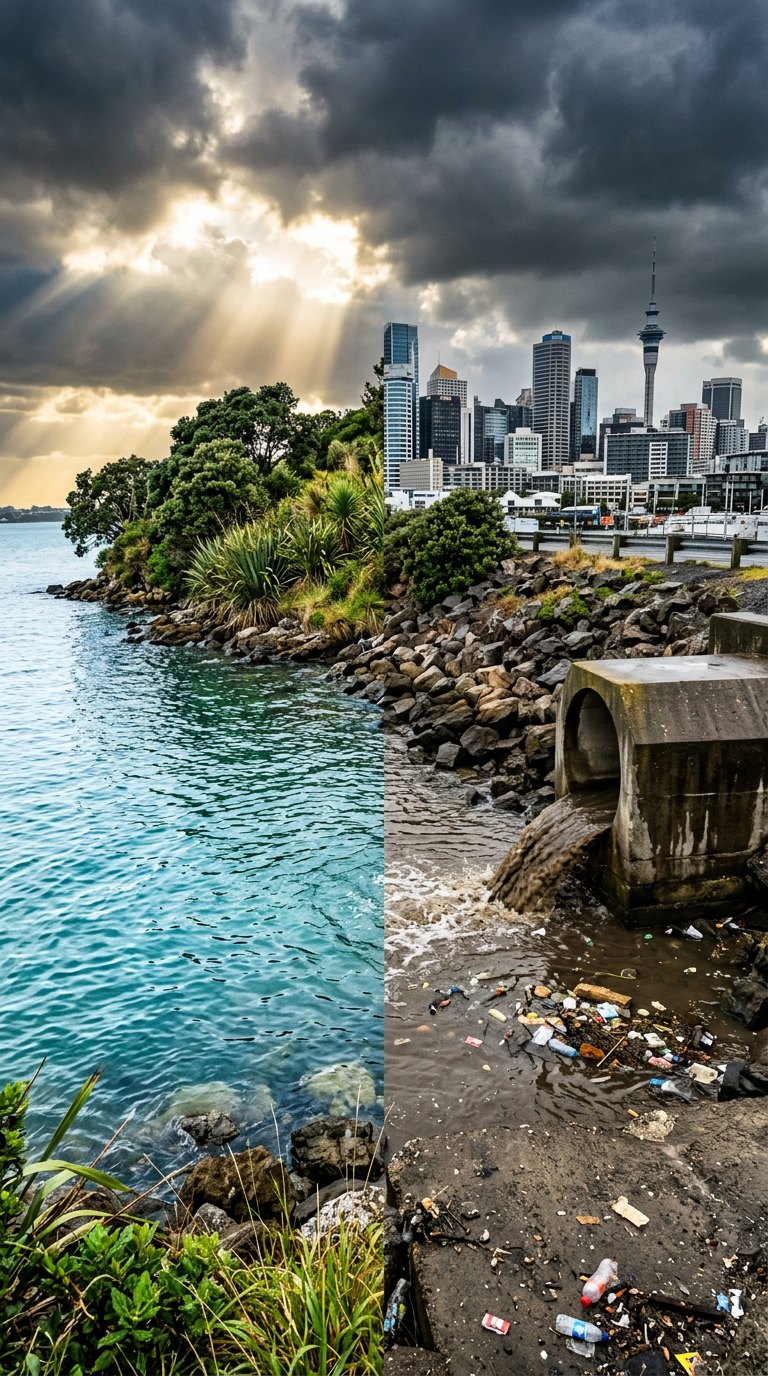
AUCKLAND GREEN • HARBOUR, BUSH & NEIGHBOURHOOD ACTION
Our Harbour Is Choking — What You Can Do
How runoff reaches the Waitematā—and the practical steps Aucklanders can take to turn the tide.
Inside This Issue
Auckland Green: The Work Ahead
03 — Harbour Under Pressure: tracing stormwater, sediment and restoration efforts from streets to the Waitematā.
06 — Bush at the Doorstep: how volunteers, mana whenua and councils are reconnecting native habitat across the city.
10 — Neighbourhoods in Action: practical local projects turning shared streets, gardens and reserves into climate assets.
14 — The Accountability Ledger: commitments, measures and next steps for a healthier, fairer Tāmaki Makaurau.
In this issue
Auckland Green
2
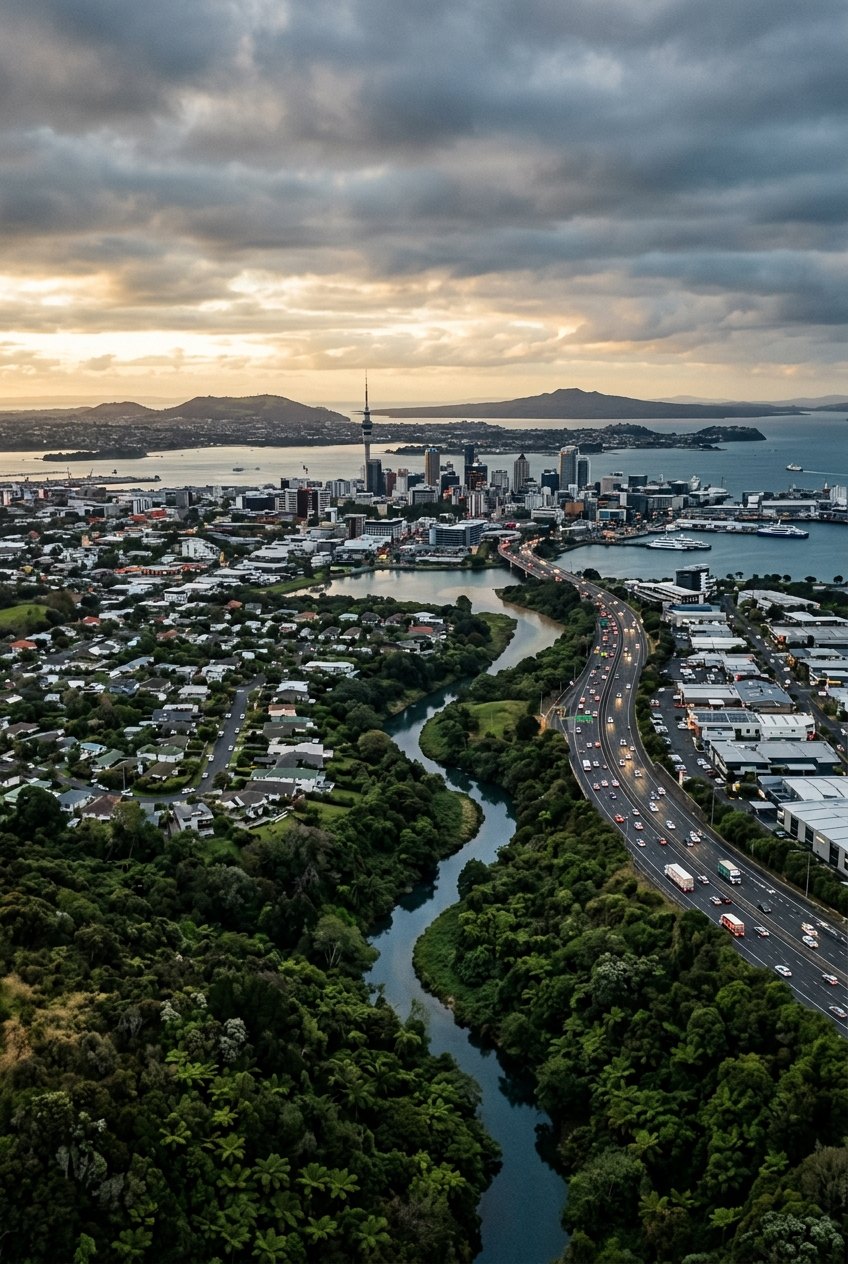
THE STATE OF AUCKLAND | A city shaped by water—and by what flows into it
Paradise, Under Pressure
From the Waitākere ranges to the Hauraki Gulf, Tāmaki Makaurau still wears its wildness proudly. Yet beneath the postcard view, stormwater carries sediment, litter and contaminants into creeks and harbours; fragmented habitats leave native species with less room to recover; and too many urban waterways remain unsafe after rain. Along traffic-choked corridors, exhaust and tyre pollution add another burden. The damage is cumulative, but not inevitable: restoring wetlands, planting stream edges, improving infrastructure and making cleaner travel easier can turn the tide.
Words by the Auckland Green editorial team
FOUR PRESSURES, ONE CITY
The Squeeze Is Local
Climate, water, nature and growth collide street by street. The fixes must meet there too.
By the Auckland Green editorial team
After rain, every kerb, garden and drain becomes part of Auckland’s water system.
ASK BEFORE APPROVING — demand stormwater, biodiversity and climate assessments before any new development gets the green light in your neighbourhood.
One street. Four pressures. Shared choices can ease them all.
Auckland’s environmental pressures rarely arrive alone. A hotter climate intensifies downpours and drought; hard surfaces push stormwater into streams and the harbour; lost tree cover removes shade and habitat; car-dependent growth adds emissions while consuming more land. The burden is uneven. Low-lying homes, renters, people in poorly insulated housing and communities with fewer parks can face greater risk while having less power to shape investment. Māori experience an added loss when polluted wai and damaged ecosystems weaken relationships with whenua and customary practice. Treating each problem in isolation can simply move harm elsewhere.
START ON YOUR BLOCK — plant a rain garden, swap paving for gravel, or join a local stream-care group. Every action compounds.
Scan for Auckland Council consultations and current ways to have your say.
Feature
Auckland Green
4
“The health and wellbeing of the Waitematā is intrinsically linked to the health and wellbeing of our people.”
Ngarimu Blair, Ngāti Whātua Ōrākei
Everything Flows to the Harbour
Auckland Green
5
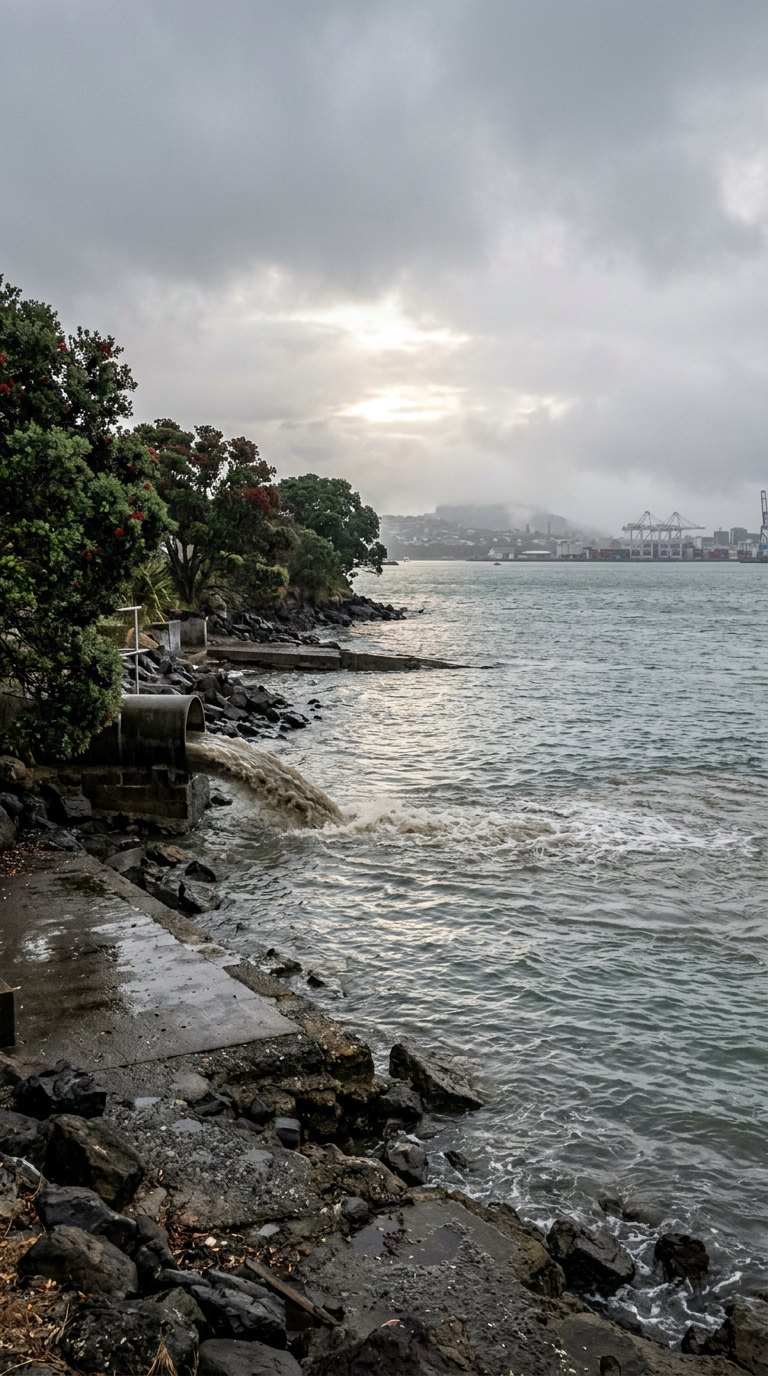
OUR HARBOUR IS CHOKING | What heavy rain leaves behind
When the Rain Turns Toxic
Beneath older Auckland neighbourhoods, one network carries both sewage and stormwater. In heavy rain, runoff surges into pipes that can no longer hold the combined flow. To stop it backing up into homes and streets, overflow points release diluted—but still contaminated—wastewater into streams and the Waitematā. The slicks and warning signs may fade within days; the deeper cost is borne by shellfish beds, swimming spots and communities repeatedly cut off from the water. This investigation follows that hidden route from kerb to harbour, and asks how quickly Auckland can separate, store and treat what the rain flushes loose.
By the Auckland Green investigations team
The Harbour Crisis | Wastewater, wildlife and the long repair
After the Downpour
By the Auckland Green editorial team
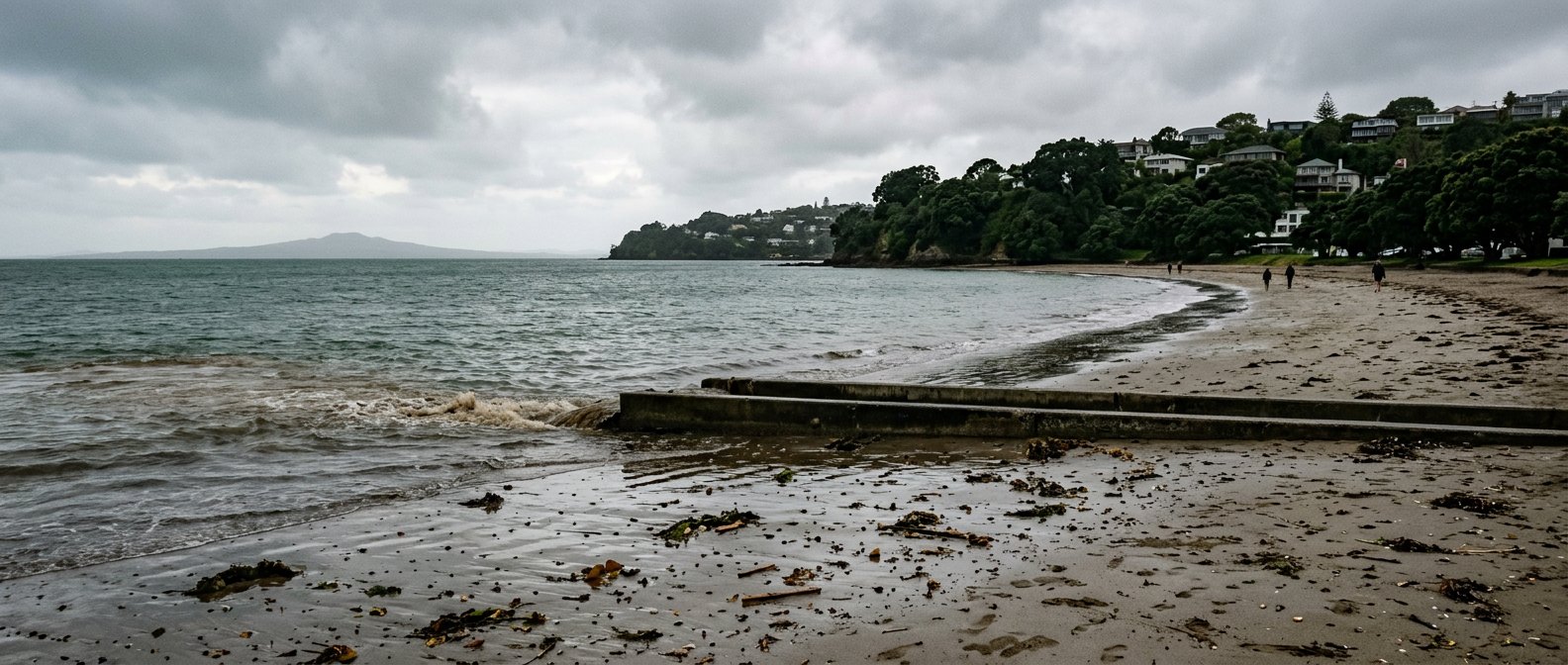
After heavy rain, SafeSwim advice should shape where—and whether—Aucklanders enter the water.
A generational fix, not a finish line.
Rain reveals the harbour’s hidden plumbing. When stormwater enters cracked or cross-connected wastewater pipes, flows can overwhelm parts of the network and trigger overflows into streams and beaches. The immediate risk is microbial: swimmers may face stomach, skin and ear infections. The ecological damage is slower and less visible. Sewage and polluted runoff carry nutrients, sediment, litter and chemicals into estuaries, stressing shellfish beds, smothering habitat and reducing oxygen as organic matter breaks down.
The Harbour Crisis
Auckland Green
7
WHERE THE WATER FAILS / MAP KEY
3
Follow the overflow
Rain finds the weak points between streets, streams, pipes and the Waitematā.
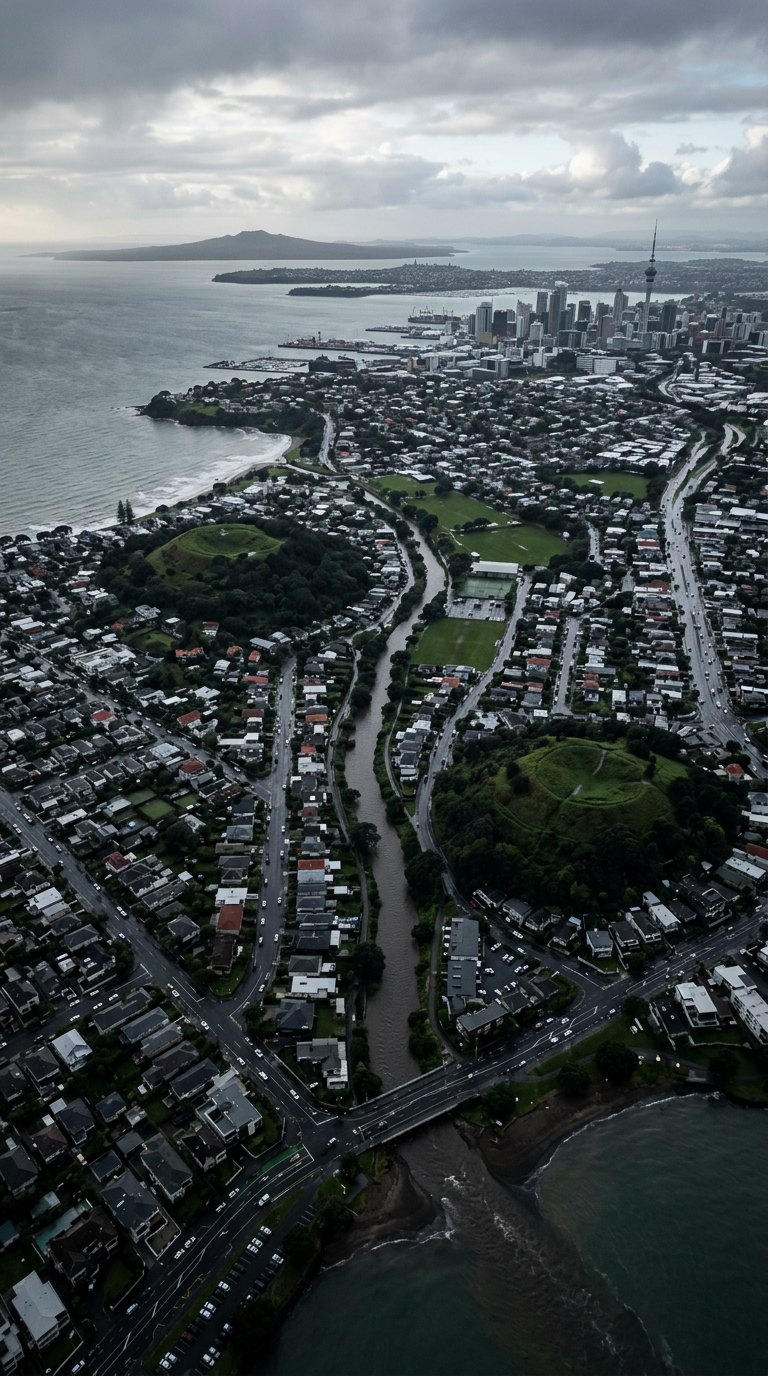
After rain, stormwater can carry litter and contaminants from hard surfaces into streams and the harbour.
network types: stormwater and wastewater
Read the map from high ground to coast. Rain runs off roofs and roads, enters drains and streams, then follows low points toward the harbour. Marked paths show likely movement, not property-level forecasts.
Beach markers flag places that may be affected after rain or network faults. Conditions change quickly: avoid discoloured water, heed rāhui and warning signs, and check live guidance before entering.
2
connected catchment from ridge to harbour
1
assumptions: check current advice before swimming
0
map layers: waterways, overflow paths, impacted beaches
Sources: Auckland Council GeoMaps, Watercare network information and Safeswim guidance. Map is indicative, not live.
Where the Water Fails
Auckland Green
8
NATIVE BUSH UNDER PRESSURE
At the Kauri Line
Clean boots, closed tracks and patient hands: protecting the ngahere starts at its edges.
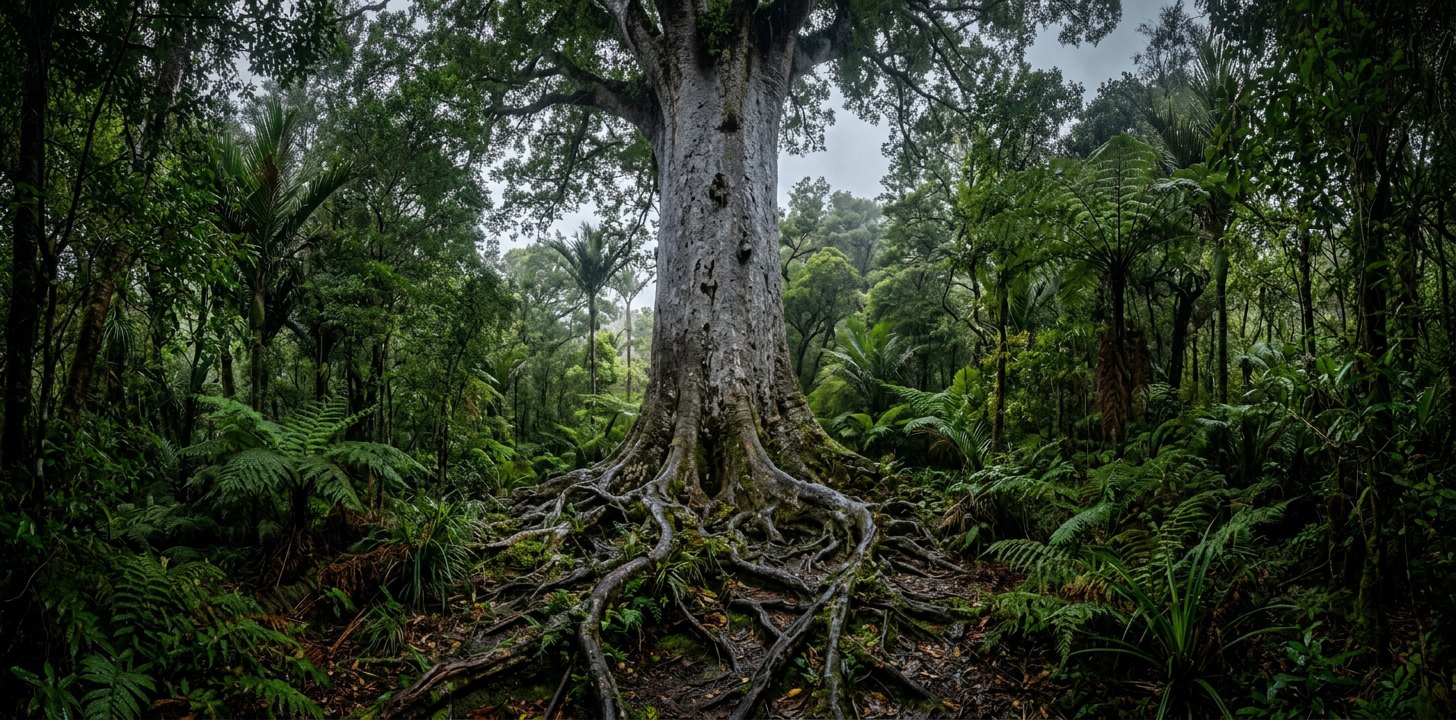
A mature kauri rises above regenerating bush in the Waitākere Ranges, where healthy roots depend on careful visitors.
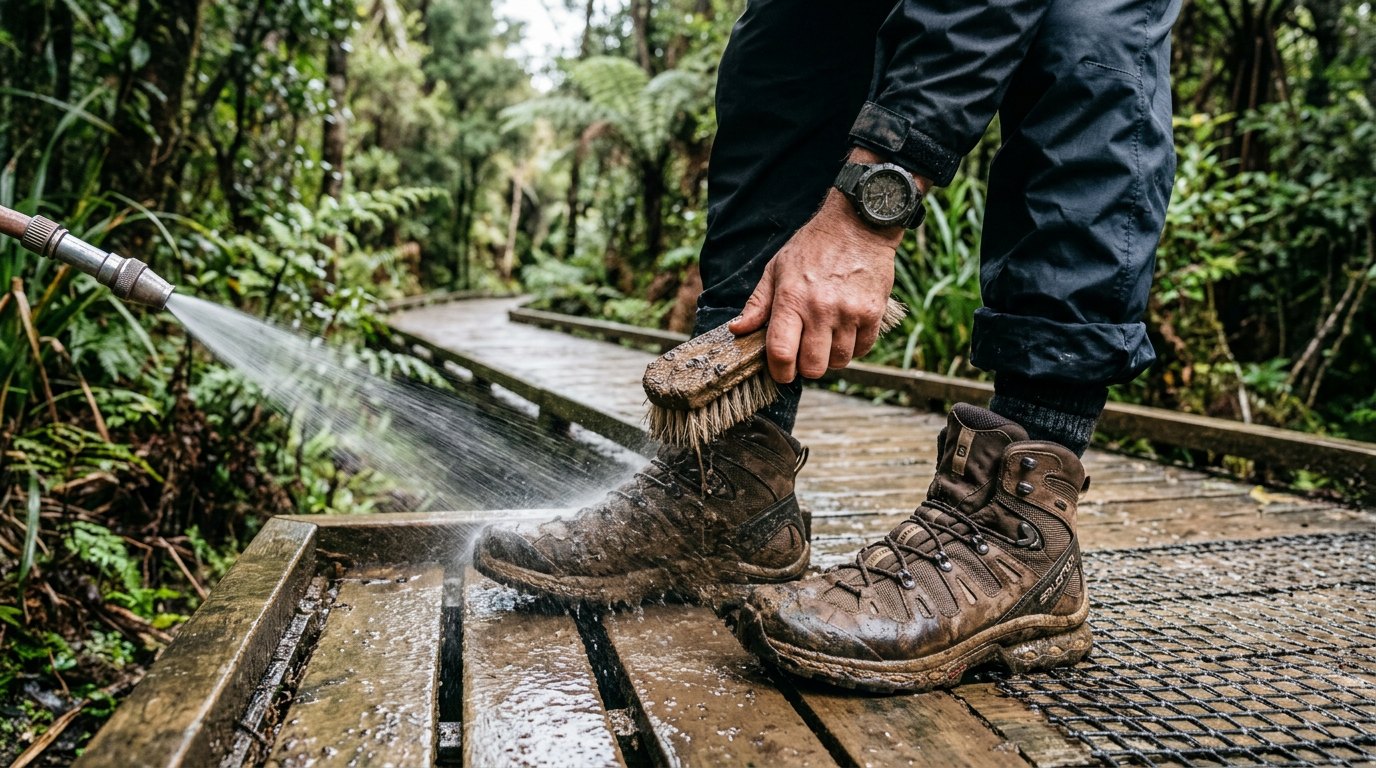
Scrub, spray, wait: footwear must be soil-free before and after every forest visit to limit dieback spread.
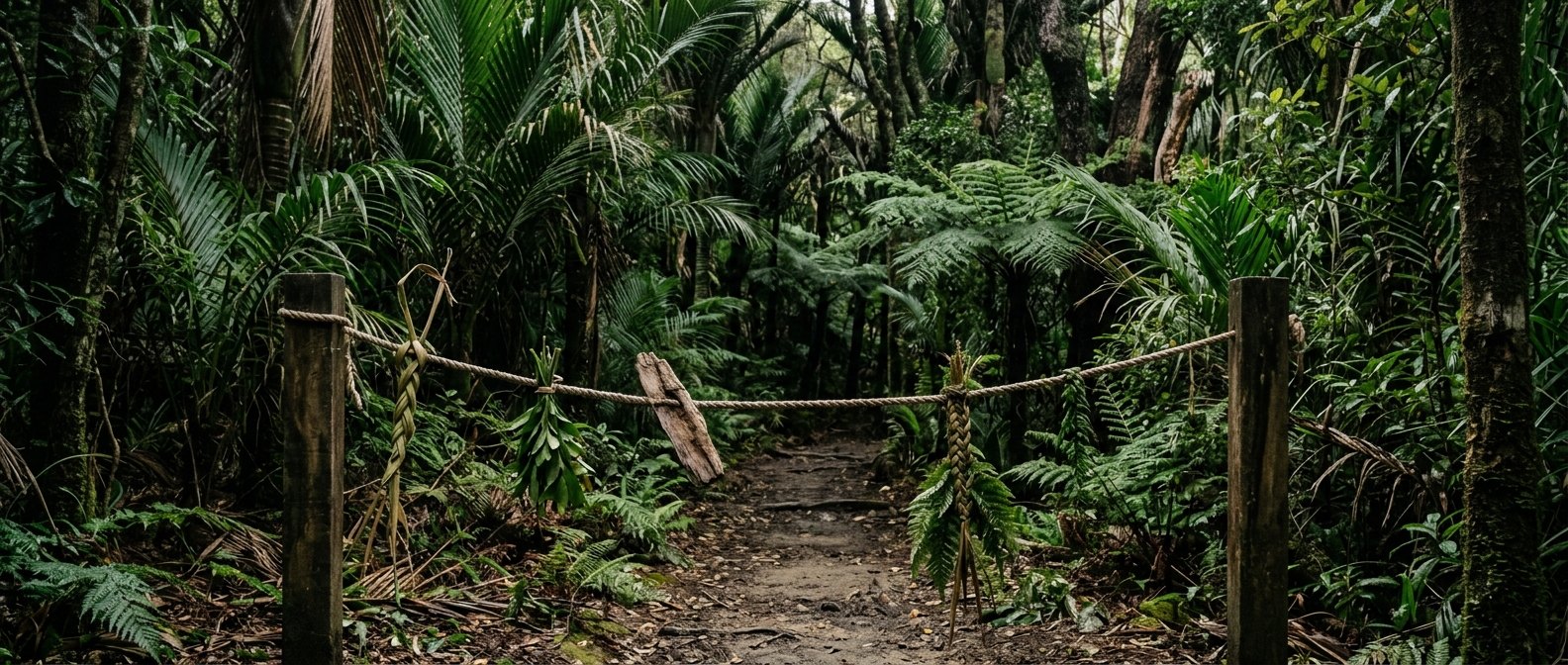
A rāhui asks everyone to pause and respect mana whenua leadership while vulnerable forest areas recover.
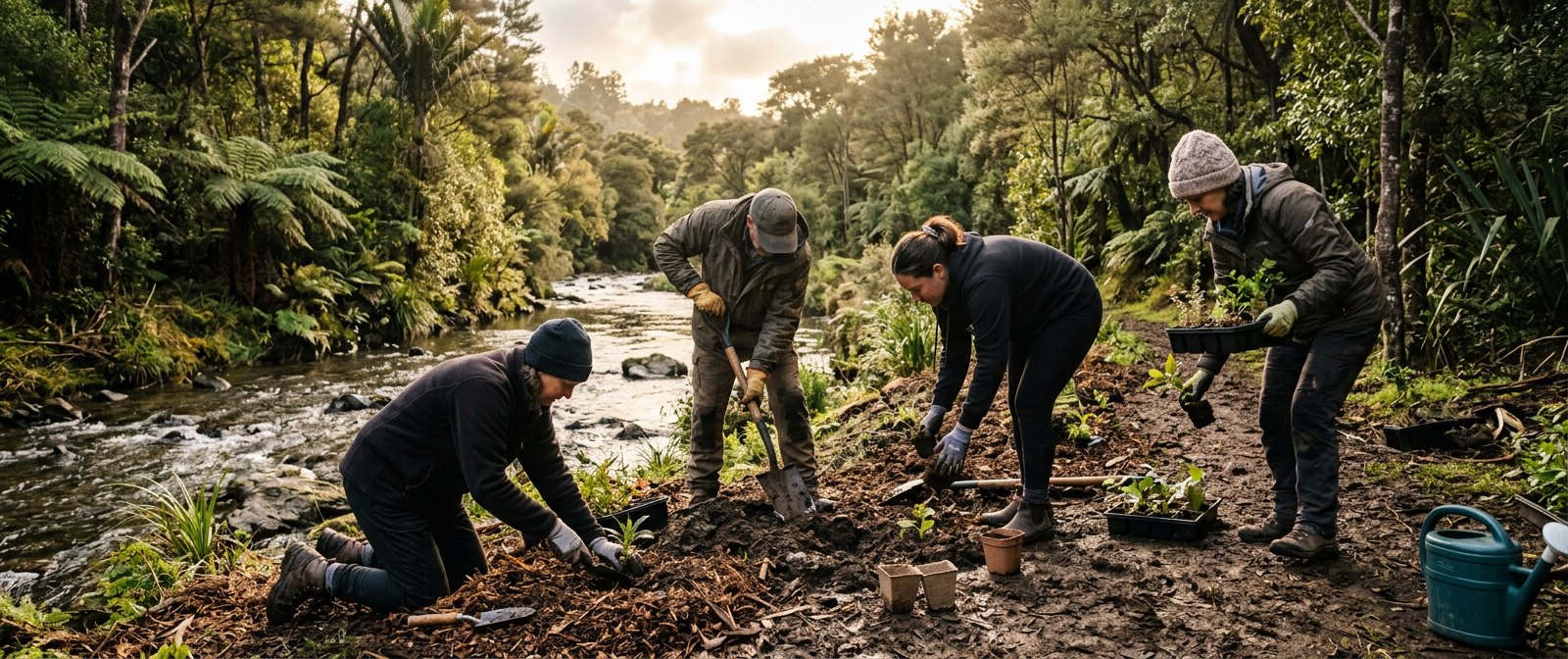
Community planters tuck an eco-sourced seedling into mulch, rebuilding a living buffer around the ngahere.
Protection is cumulative: choose open tracks, use hygiene stations properly and never step around a closure.
Gallery
Auckland Green
9
Kauri survive when science, track discipline and neighbourhood care work together.
Hold the Line for Kauri
By the Auckland Green editorial team
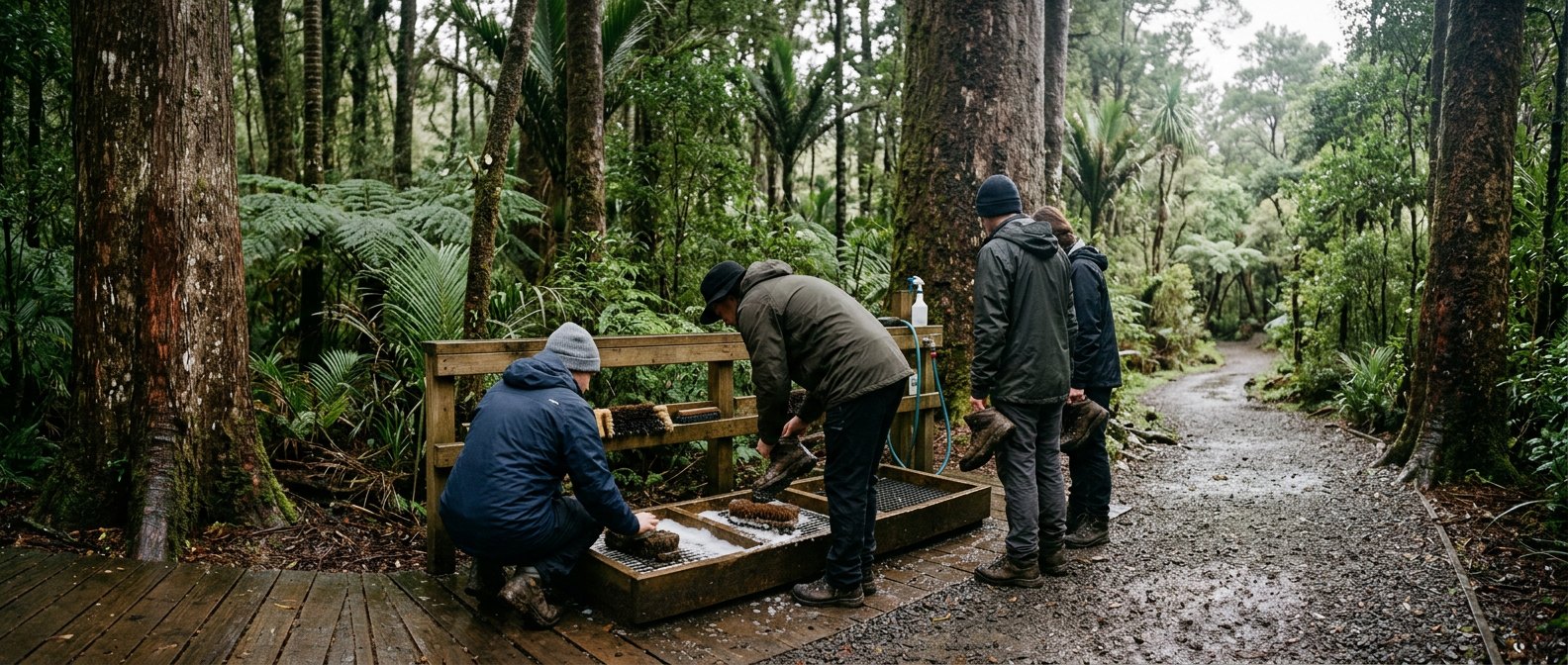
Every cleaned boot helps keep contaminated soil away from vulnerable kauri roots.
Kauri dieback is caused by the soil-borne pathogen Phytophthora agathidicida. It damages fine roots, starves trees of water and nutrients, and can kill kauri of any age. There is no proven cure, so preventing movement is critical. Mud on boots, tyres, tools and animal paws can carry contaminated soil between sites. In the Waitākere Ranges, closed tracks and protective rāhui are barriers against that spread—not invitations to find a shortcut. Stay on open routes, use hygiene stations correctly and turn back when conditions are too muddy.
Friends of the Waitākere Ranges turns concern into patient, practical guardianship. Volunteers advocate for strong kauri protection, share reliable advice and support restoration across the ngahere and its neighbourhood edges. Residents can help by checking current track status before leaving home, scrubbing footwear clean and using disinfectant at every station. At home, remove invasive weeds, clean tools before moving them, control pets near bush margins and plant locally appropriate natives. Small habits, repeated widely, give recovering habitat room to breathe.
Guardians of the Waitākere
Auckland Green
10
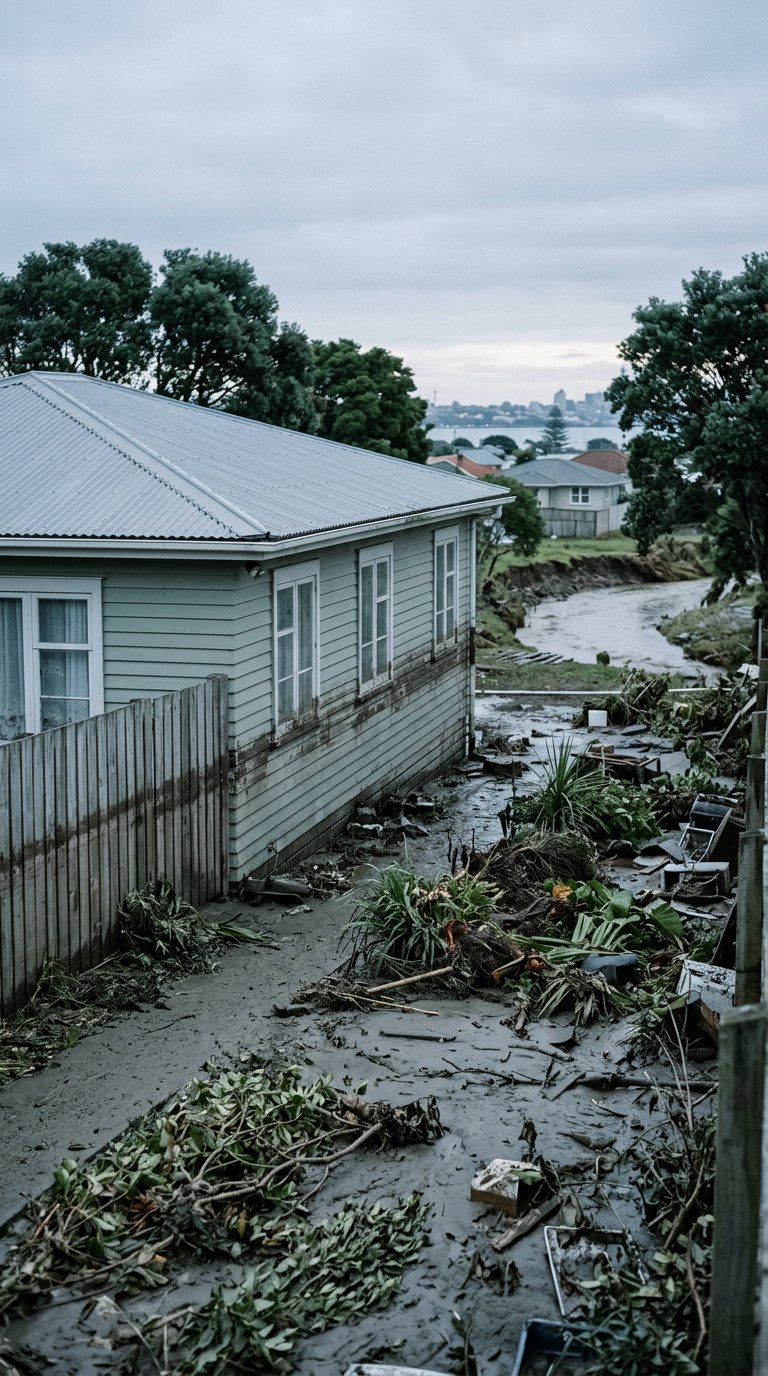
CLIMATE & THE CITY | AFTER THE JANUARY 2023 FLOODS
The Waterline Is Rising
The January 2023 floods left a waterline across Tāmaki Makaurau: on walls, gardens and the lives of families forced from home. It also exposed a harder truth. As seas rise and intense downpours grow more likely, low-lying neighbourhoods face overlapping threats from streams, stormwater and the harbour. Resilience cannot wait for the next emergency. It means restoring floodplains, upgrading drainage, planning fair retreat where necessary and putting residents—especially those with the fewest choices—at the centre of every decision.
By the Auckland Green editorial team
AFTER THE FLOOD | POLICY CHECK
Plans Meet the Waterline
By the Auckland Green editorial team
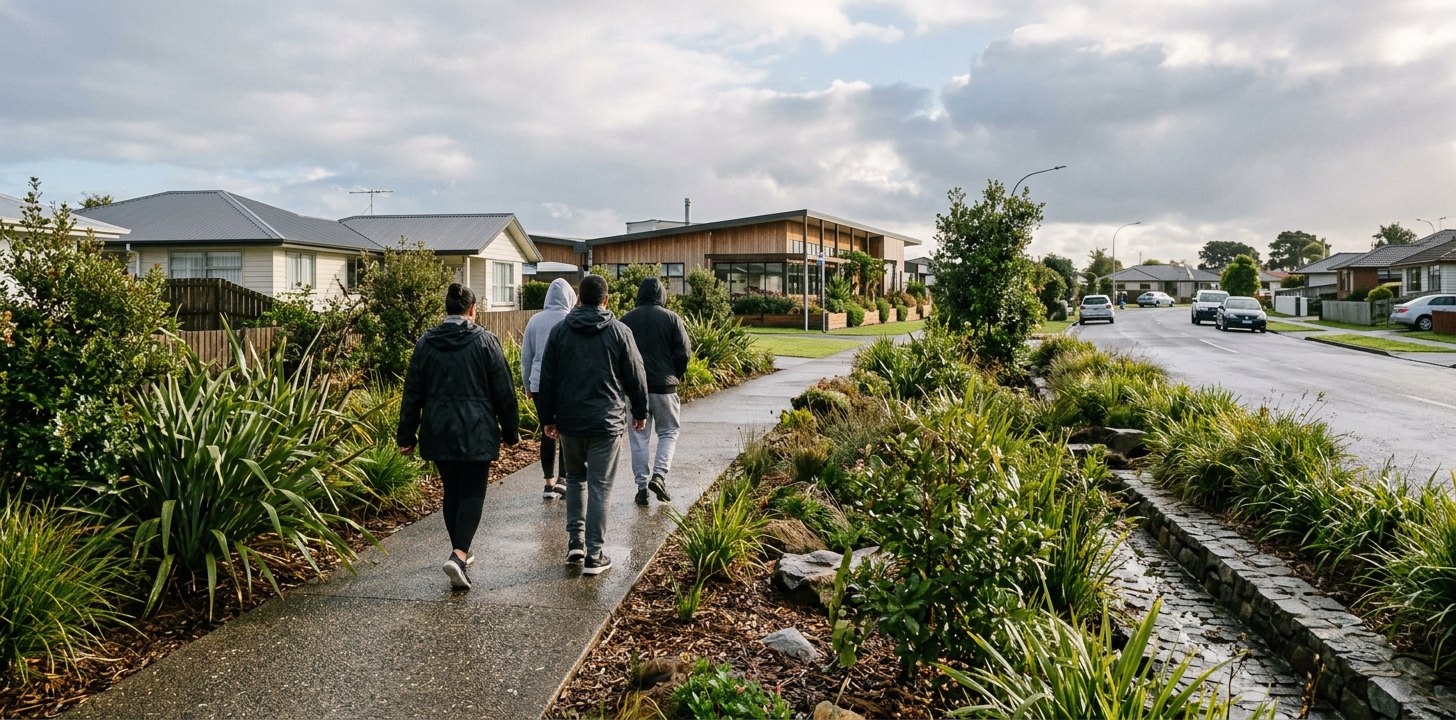
A rain garden in Māngere holds runoff where kerbs, planting and footpaths meet.
Te Tāruke-ā-Tāwhiri, Auckland’s climate plan, sets an adopted regional direction: halve gross emissions by 2030, reach net zero by 2050 and prepare for climate impacts. The Auckland Plan, planning rules and council infrastructure programmes also support more compact growth, water-sensitive design and risk-aware investment. These are real policy settings, but they do not guarantee delivery. Budgets, consenting decisions, transport priorities and coordination with central government determine whether the promise reaches each street.
The gap is visible after heavy rain. Too many homes remain exposed; streams and pipes are constrained; and adaptation pathways are not yet clear enough for every at-risk neighbourhood. Managed adaptation may include protection, redesign, property purchase or relocation, but credible pathways require triggers, timelines and durable funding. Auckland also needs faster building retrofits, lower-emission transport and nature-based drainage at catchment scale. Until implementation is funded and measured, resilience remains uneven.
After the Flood
Auckland Green
12
COMMUNITY HEROES | FOUR TEAMS TURNING CARE INTO EVERYDAY CLIMATE ACTION
local teams caring for water, soil and resources
Good Work, Close to Home
Across Tāmaki Makaurau, practical local action is restoring waterways, soil and the way we share food.
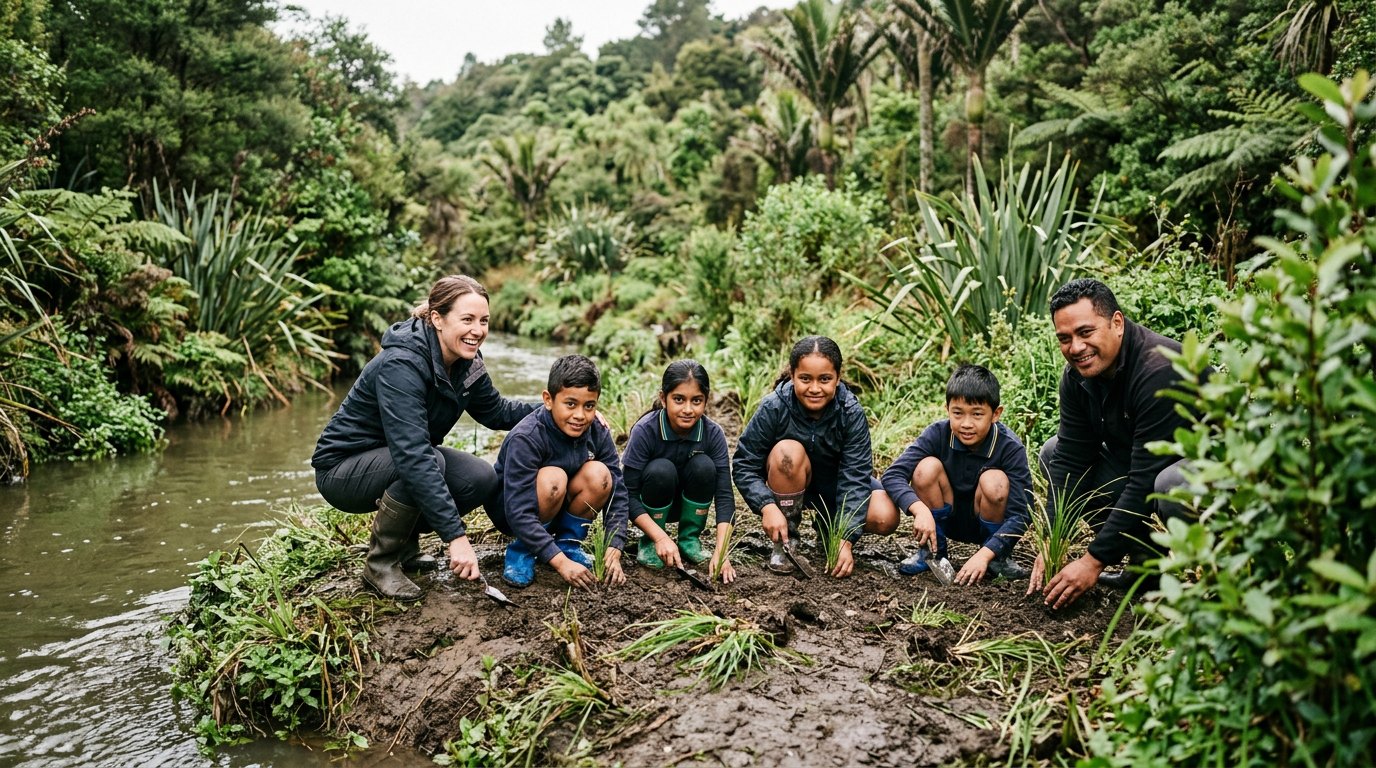
Students test, plant and observe—learning that a healthy stream begins with steady care.
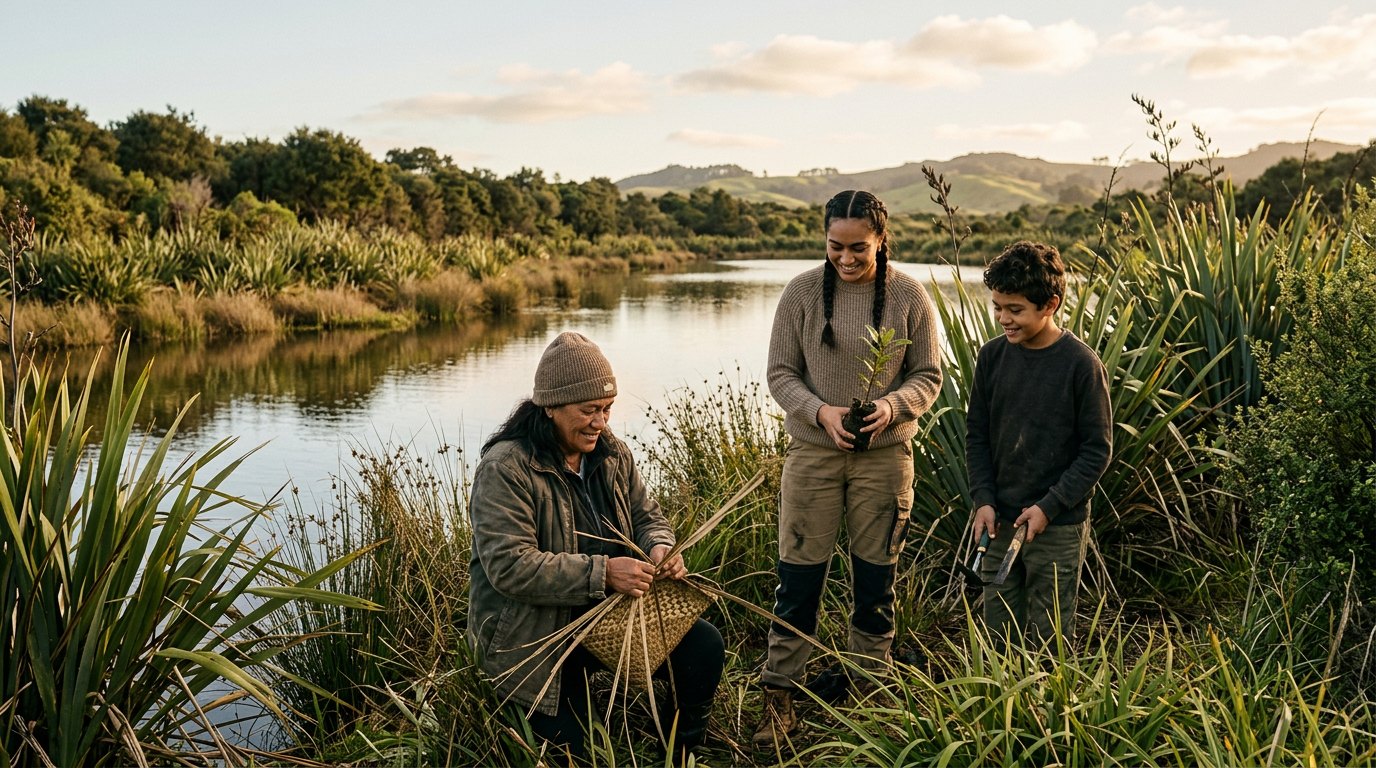
Mātauranga Māori and hands-on restoration guide the return of resilient wetland habitat.
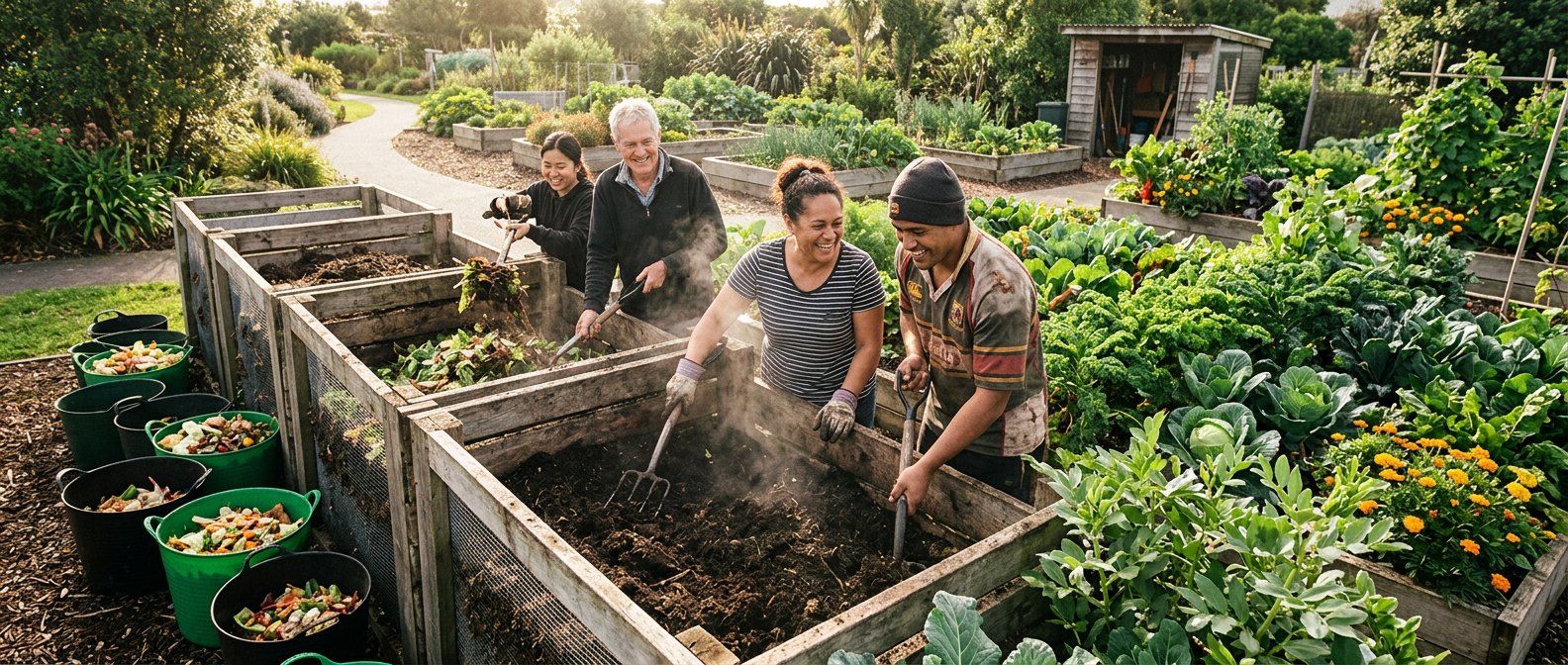
South Auckland food scraps become living soil through a neighbourhood-led compost loop.

Refill jars, returnable cups and thoughtful purchasing make waste prevention part of service.
STREAM KEEPERS
Community Heroes
Auckland Green
13
CHANGE LIVES HERE · THREE LOCAL VOICES, ONE SHARED FUTURE
14
“When neighbours bring one small patch back to life, the whole street starts to imagine what else is possible.”
— Community planting organiser, South Auckland
“The harbour is our meeting place. Caring for it means listening to the people who know every tide, creek and shoreline.”
— Harbour restoration volunteer, West Auckland
“Hope becomes practical when we share tools, check on each other and make the greener choice easier for everyone.”
— Neighbourhood climate advocate, Central Auckland
Change grows close to home—in restored whenua, cleaner water and neighbours acting together.
Change Lives Here
Auckland Green
14
Five practical moves for cleaner streams, richer bush and stronger neighbourhoods
Five Ways to Act Now
3
for a weekly litter sweep outside your home
1
of lawn to turn into layered native habitat
2
can put local knowledge on the consent record
By the numbers
Auckland Green
15
Five everyday commitments. One greener Tāmaki Makaurau.
16 • BACK COVER
Take the Auckland Green Pledge
Choose five practical actions for our harbour, bush, streets and communities.
Carry reusables and refuse unnecessary single-use packaging
Walk, cycle, share a ride or take public transport more often
Keep litter, paint, oil and chemicals out of stormwater drains
Plant native species and protect local birds, insects and waterways
Join, support or start a neighbourhood environmental project
Scan to sign the pledge, save your commitments and find a local action.
I pledge to make choices that help Tāmaki Makaurau thrive. I will carry reusables and cut single-use waste; choose lower-carbon ways to travel; keep pollutants out of drains and the harbour; grow and protect native habitat; and give time, skills or support to neighbourhood action. I will start where I am, invite others in and keep going—because a healthier city is built through practical acts, repeated together.
Share your action: @AucklandGreen • #AucklandGreenPledge • #TiakinaTāmaki
Your reaction
How did this land with you?
A yes/no can't carry how you feel — pick the face that does. Every reaction is counted — we'll check it's you with a quick email code.
0 reactions recorded